Deprecated: Return type of Ai1wm_Recursive_Directory_Iterator::hasChildren($allow_links = true) should either be compatible with RecursiveDirectoryIterator::hasChildren(bool $allowLinks = false): bool, or the #[\ReturnTypeWillChange] attribute should be used to temporarily suppress the notice in /home/ceerenco/learnenglishfondly.com/wp-content/plugins/All-In-One-WP-Migration-With-Import-master/lib/vendor/servmask/iterator/class-ai1wm-recursive-directory-iterator.php on line 57

Deprecated: Return type of Ai1wm_Recursive_Directory_Iterator::rewind() should either be compatible with FilesystemIterator::rewind(): void, or the #[\ReturnTypeWillChange] attribute should be used to temporarily suppress the notice in /home/ceerenco/learnenglishfondly.com/wp-content/plugins/All-In-One-WP-Migration-With-Import-master/lib/vendor/servmask/iterator/class-ai1wm-recursive-directory-iterator.php on line 35

Deprecated: Return type of Ai1wm_Recursive_Directory_Iterator::next() should either be compatible with DirectoryIterator::next(): void, or the #[\ReturnTypeWillChange] attribute should be used to temporarily suppress the notice in /home/ceerenco/learnenglishfondly.com/wp-content/plugins/All-In-One-WP-Migration-With-Import-master/lib/vendor/servmask/iterator/class-ai1wm-recursive-directory-iterator.php on line 42

Deprecated: Return type of Ai1wm_Recursive_Extension_Filter::getChildren() should either be compatible with RecursiveFilterIterator::getChildren(): ?RecursiveFilterIterator, or the #[\ReturnTypeWillChange] attribute should be used to temporarily suppress the notice in /home/ceerenco/learnenglishfondly.com/wp-content/plugins/All-In-One-WP-Migration-With-Import-master/lib/vendor/servmask/filter/class-ai1wm-recursive-extension-filter.php on line 47

Deprecated: Return type of Ai1wm_Recursive_Extension_Filter::accept() should either be compatible with FilterIterator::accept(): bool, or the #[\ReturnTypeWillChange] attribute should be used to temporarily suppress the notice in /home/ceerenco/learnenglishfondly.com/wp-content/plugins/All-In-One-WP-Migration-With-Import-master/lib/vendor/servmask/filter/class-ai1wm-recursive-extension-filter.php on line 37

Deprecated: Return type of Ai1wm_Recursive_Exclude_Filter::getChildren() should either be compatible with RecursiveFilterIterator::getChildren(): ?RecursiveFilterIterator, or the #[\ReturnTypeWillChange] attribute should be used to temporarily suppress the notice in /home/ceerenco/learnenglishfondly.com/wp-content/plugins/All-In-One-WP-Migration-With-Import-master/lib/vendor/servmask/filter/class-ai1wm-recursive-exclude-filter.php on line 41

Deprecated: Return type of Ai1wm_Recursive_Exclude_Filter::accept() should either be compatible with FilterIterator::accept(): bool, or the #[\ReturnTypeWillChange] attribute should be used to temporarily suppress the notice in /home/ceerenco/learnenglishfondly.com/wp-content/plugins/All-In-One-WP-Migration-With-Import-master/lib/vendor/servmask/filter/class-ai1wm-recursive-exclude-filter.php on line 37

Deprecated: Return type of Ai1wm_Recursive_Newline_Filter::accept() should either be compatible with FilterIterator::accept(): bool, or the #[\ReturnTypeWillChange] attribute should be used to temporarily suppress the notice in /home/ceerenco/learnenglishfondly.com/wp-content/plugins/All-In-One-WP-Migration-With-Import-master/lib/vendor/servmask/filter/class-ai1wm-recursive-newline-filter.php on line 28

Deprecated: Return type of WPCF7_FormTag::offsetExists($offset) should either be compatible with ArrayAccess::offsetExists(mixed $offset): bool, or the #[\ReturnTypeWillChange] attribute should be used to temporarily suppress the notice in /home/ceerenco/learnenglishfondly.com/wp-content/plugins/contact-form-7/includes/form-tag.php on line 542

Deprecated: Return type of WPCF7_FormTag::offsetGet($offset) should either be compatible with ArrayAccess::offsetGet(mixed $offset): mixed, or the #[\ReturnTypeWillChange] attribute should be used to temporarily suppress the notice in /home/ceerenco/learnenglishfondly.com/wp-content/plugins/contact-form-7/includes/form-tag.php on line 528

Deprecated: Return type of WPCF7_FormTag::offsetSet($offset, $value) should either be compatible with ArrayAccess::offsetSet(mixed $offset, mixed $value): void, or the #[\ReturnTypeWillChange] attribute should be used to temporarily suppress the notice in /home/ceerenco/learnenglishfondly.com/wp-content/plugins/contact-form-7/includes/form-tag.php on line 516

Deprecated: Return type of WPCF7_FormTag::offsetUnset($offset) should either be compatible with ArrayAccess::offsetUnset(mixed $offset): void, or the #[\ReturnTypeWillChange] attribute should be used to temporarily suppress the notice in /home/ceerenco/learnenglishfondly.com/wp-content/plugins/contact-form-7/includes/form-tag.php on line 552

Deprecated: Return type of WPCF7_Validation::offsetExists($offset) should either be compatible with ArrayAccess::offsetExists(mixed $offset): bool, or the #[\ReturnTypeWillChange] attribute should be used to temporarily suppress the notice in /home/ceerenco/learnenglishfondly.com/wp-content/plugins/contact-form-7/includes/validation.php on line 129

Deprecated: Return type of WPCF7_Validation::offsetGet($offset) should either be compatible with ArrayAccess::offsetGet(mixed $offset): mixed, or the #[\ReturnTypeWillChange] attribute should be used to temporarily suppress the notice in /home/ceerenco/learnenglishfondly.com/wp-content/plugins/contact-form-7/includes/validation.php on line 117

Deprecated: Return type of WPCF7_Validation::offsetSet($offset, $value) should either be compatible with ArrayAccess::offsetSet(mixed $offset, mixed $value): void, or the #[\ReturnTypeWillChange] attribute should be used to temporarily suppress the notice in /home/ceerenco/learnenglishfondly.com/wp-content/plugins/contact-form-7/includes/validation.php on line 98

Deprecated: Return type of WPCF7_Validation::offsetUnset($offset) should either be compatible with ArrayAccess::offsetUnset(mixed $offset): void, or the #[\ReturnTypeWillChange] attribute should be used to temporarily suppress the notice in /home/ceerenco/learnenglishfondly.com/wp-content/plugins/contact-form-7/includes/validation.php on line 139

Deprecated: Constant FILTER_SANITIZE_STRING is deprecated in /home/ceerenco/learnenglishfondly.com/wp-content/plugins/wordpress-seo/src/conditionals/third-party/elementor-edit-conditional.php on line 22

Deprecated: Constant FILTER_SANITIZE_STRING is deprecated in /home/ceerenco/learnenglishfondly.com/wp-content/plugins/wordpress-seo/src/conditionals/third-party/elementor-edit-conditional.php on line 28

Warning: Cannot modify header information - headers already sent by (output started at /home/ceerenco/learnenglishfondly.com/wp-content/plugins/contact-form-7/includes/form-tag.php:8) in /home/ceerenco/learnenglishfondly.com/wp-includes/feed-rss2.php on line 8
seviyeler a1 arşivleri | İngilizceyi Severek Öğren https://learnenglishfondly.com İngilizceyi Severek,Kolayca,Hızlı Öğren Wed, 04 Sep 2019 12:20:11 +0000 tr hourly 1 https://wordpress.org/?v=6.0.11 Substitution About Pronouns https://learnenglishfondly.com/substitution-about-pronouns-2/ https://learnenglishfondly.com/substitution-about-pronouns-2/#respond Mon, 02 Sep 2019 15:38:08 +0000 https://learnenglishfondly.com/?p=2272 İngilizceyi Severek Öğren İngilizceyi Severek Öğren - İngilizceyi Severek,Kolayca,Hızlı Öğren

One, ones “Do you need a pen ?” “No, thanks. I already have one.” (“Bir kaleme ihtiyacınız var mı?” “Hayır, teşekkürler. Benim zaten bir tane var.”) I prefer light colours to dark ones. (Ben koyu renklere açık renkleri tercih ederim.) The shopkeeper showed me two T-shirts and I bought the one with some flower patterns …

The post Substitution About Pronouns appeared first on İngilizceyi Severek Öğren.

]]>
İngilizceyi Severek Öğren İngilizceyi Severek Öğren - İngilizceyi Severek,Kolayca,Hızlı Öğren

One, ones

‘One’, sayılabilir tekil bir ismin yerine, “ones” sayılabilir çoğul bir ismin yerine kullanılır.
ÖRNEK :mrgreen:
  • “Do you need a pen ?” “No, thanks. I already have one.” (“Bir kaleme ihtiyacınız var mı?” “Hayır, teşekkürler. Benim zaten bir tane var.”)
  • I prefer light colours to dark ones. (Ben koyu renklere açık renkleri tercih ederim.)
  • The shopkeeper showed me two T-shirts and I bought the one with some flower patterns on. (Mağaza sahibi bana iki T-shirt gösterdi ve ben üzerinde çiçek deseni olanı aldım.)
  • The students in class B have got much better scores than the ones in C. (B sınıfındaki öğrenciler, C sınıfındakilerden daha iyi puanlara sahipler.)
  • The small buildings over there belong to the staff but those large ones are where the administrators stay. (Oranın üzerindeki küçük binalar personele aittir, ama bunların büyükleri yöneticilerin kaldıkları yerlerdir.)
İsmin yerine geçecek ‘one’ ya da ‘ones’ zamirlerinin kastettiği isimlere işaret edilmesi veya bunların belirtilmesi gerekiyorsa (örneğin bir “relative clause” ile), o zaman başlarına ‘the’ alırlar.
ÖRNEK :mrgreen:
  • “I would like to try that shirt on.” “Which one?” “The blue one.” (“O gömleği denemek istiyorum.” “Hangisi?” “Mavi olanı.”)
  • “Those students in the back row are from the States, but the ones in the front line are from Canada.” (“Arka sıradaki öğrenciler Amerikalılar, ama ön sıradakiler Kanadalılar.”)
“A/an, my/your … etc., some, any, both” ve sayıların hemen arkasından “one/ones” kullanılmaz. Ancak arada bir sıfat varsa ‘one’, ‘ones’ kullanılabilir.
ÖRNEK :mrgreen:
  • Don’t make a sudden decision to work in that company; you deserve a better one with your qualifications. (O şirkette çalışmak için ani bir karar alma; sen niteliklerine göre daha iyi bir tanesini hak ediyorsun.)
  • The bowl was so small for the salad she made that she had to use two large ones to serve it. (Kase onun yaptığı salata için o kadar küçüktü ki o, salatayı servis etmek için iki tane büyük olanını kullanmak zorunda kaldı.)
“The, this, that, these, those, each, another, which” ya da superlative adjective’den sonra “one/ones” kullanılabilir ancak zorunlu değildir.
ÖRNEK :mrgreen:
  • Don’t insist on answering all the questions in this book; those ones in the worksheet will be enough for revision. (Bu kitaptaki bütün soruları cevaplamakta ısrar etme; çalışma kağıdındakiler gözden geçirmen için yeterli olacak.)
  • The band that performed the last in the contest was also the best (one). (Yarışmada en son sırada performans alan grup da en iyilerinden biriydi.)
  • Which (one) would you like to buy out of these two dresses? I will buy the black one if you buy the other (one). (Bu iki elbise dışında almak istediğiniz hangisi? Eğer diğerini alırsam siyah olanını alacağım.)
  • Please, don’t wear this pink tie; get another (one). (Lütfen bu pembe kravatı takma; başka bir tane al.)
Bu zamirler ‘relative clause’ yapısıyla da yaygın olarak kullanılır.
ÖRNEK :mrgreen:
  • The one who is standing over there is our landlady. (Onun üzerinde duruyor olan kimse bizim ev sahibimizdi.)
  • Dolores has filed the ones which belong to past year’s clients. (Dolores geçen yılın müşterilerine ait olanları dosyaladı.)

That of / Those of

Bu iki yapı, cümlede daha önce bahsedilmiş bir ismi yeniden tekrarlamamak için kullanılabilir. Tekil bir isim yerine “that of”, çoğul bir isim yerine “those of” yapısı kullanılır.

ÖRNEK :mrgreen:
  • I can’t imagine a greater life than that of a teacher. (… than the life of a teacher) (Bir öğretmeninkinden daha büyük bir yaşam hayal edemiyorum.)
  • We should admit that the responsibilities of mothers are far more serious than those of fathers. (the responsibilities of fathers) (Biz, annelerin sorumluluklarının babalarınkinden daha ciddi olduğunu kabul etmeliyiz.)

One of

“One of” yapısından sonra çoğul bir isim gelir. Bu çoğul ismin başında “the, my, those” gibi bir belirleyici gelmesi zorunludur. ‘One of’ yapısından sonraki özne-fiil uyumuna dikkat etmek gerekir. Bu yapıdan sonraki fiil tekil olmalıdır.
ÖRNEK :mrgreen:
  • one of his books (onun kitaplarının birisi)
  • one of the/my/those birds (NOT one of birds)
  • One of the cars in the parking lot has been sold. (Otoparktaki arabaların biri satıldı.)
  • One of my classmates was awarded a scholarship in Canada. (Sınıf arkadaşlarımın birisi Kanada’da bursla ödüllendirildi.)
  • İstanbul is known as one of the most beautiful places not only in Europe but also in the whole world. (İstanbul, sadece Avrupa’da değil aynı zamanda bütün dünyada en güzel yerlerden biri olarak bilinir.)
Bazen “one of” tekil bir isimle kullanılır ancak bu tekil isim bir gruba gönderme yapan bir isimdir.
ÖRNEK 😀
  • Why don’t you ask one of the crew? (Neden ekipten birisine sormuyorsunuz?)

One or it

“One” bir nesneden genel olarak söz ederken, “it” ise daha önceden tanımlanmış belirli bir nesneye gönderme yapmak için kullanılır.
ÖRNEK :mrgreen:
  • I have to get a ticket to travel on public buses but I don’t know where I can get one. (Halk otobüslerinde seyahat etmek için bir bilet almak zorundayım, ama bir tane nerden alacağımı bilmiyorum.)
  • Take this card and don’t lose it; or else, you won’t be allowed to enter there. (Bu kartı al ve onu kaybetme; aksi takdirde oraya girmene izin verilmeyecek.) 
  • I haven’t got a calculator and I need one for the calculus class. (Benim bir tane hesap makinesine sahip değilim ve calculus dersi için bir tane ihtiyacım var.)
               BUT
  • “Have you seen my calculator around here?” “Yes, I’ve just seen it on your desk.” (“Buralarda hesap makinemi gördün mü?” “Evet, az önce onu senin sıranda gördüm.”)

The post Substitution About Pronouns appeared first on İngilizceyi Severek Öğren.

]]>
https://learnenglishfondly.com/substitution-about-pronouns-2/feed/ 0
OBJECT PRONOUNS https://learnenglishfondly.com/object-pronouns/ https://learnenglishfondly.com/object-pronouns/#respond Sun, 21 Jul 2019 15:33:24 +0000 https://learnenglishfondly.com/?p=1970 İngilizceyi Severek Öğren İngilizceyi Severek Öğren - İngilizceyi Severek,Kolayca,Hızlı Öğren

                 Object Pronouns, nesne zamirleri anlamına gelir. Nesne zamirleri, cümlede nesne durumundaki ismin yerini alırlar. I bought her a birthday present. (Ben ona bir doğum günü hediyesi aldım.) I bought a birthday present for her. ( Ben onun için bir doğum günü hediyesi aldım.) You can take your …

The post OBJECT PRONOUNS appeared first on İngilizceyi Severek Öğren.

]]>
İngilizceyi Severek Öğren İngilizceyi Severek Öğren - İngilizceyi Severek,Kolayca,Hızlı Öğren

                 Object Pronouns, nesne zamirleri anlamına gelir. Nesne zamirleri, cümlede nesne durumundaki ismin yerini alırlar.
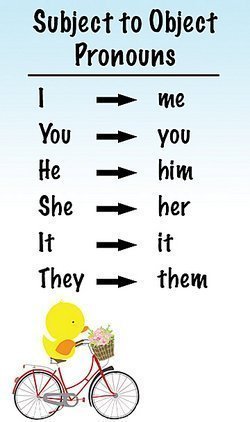
Subject Pronouns                                    Object Pronouns

 Özne Zamirleri                                          Nesne Zamirleri

I Ben Me Beni/Bana
You Sen You Seni/Sana
He O (erkek) Him Onu/Ona
She O (kadın) Her Onu/Ona
It O (cansız/hayvan) It Onu/Ona
We Biz Us Bizi/Bize
You Siz You Sizi/Size
They Onlar Them Onları/Onlara
Cümlede fiilin nesnesi olarak kullanılırlar. Cümlede iki nesne birden varsa, ‘object pronoun’ aşağıdaki örnek cümlelerdeki gibi kullanılır.
ÖRNEK 😀
  • I bought her a birthday present. (Ben ona bir doğum günü hediyesi aldım.)
  • I bought a birthday present for her. ( Ben onun için bir doğum günü hediyesi aldım.)
Phrasal Verb‘lerin bir çoğu bir nesneyle birlikte kullanıldıklarında nesne, ‘verb+noun+preposition’ şeklinde kullanılabileceği gibi ‘verb+preposition+noun’ şeklinde de kullanılabilir.
ÖRNEK 😀
  • You can take your jacket off if you like. (Eğer isterseniz ceketinizi çıkarabilirsiniz.)
  • You can take off your jacket if you like. (Eğer isterseniz ceketinizi çıkarabilirsiniz.)
“As” ve “than” yapılarından sonra kısa cevap verirken “informal” dilde nesne zamirleri kullanılır.
ÖRNEK 😀
  • My sister is nearly as tall as me. (Kız kardeşim neredeyse benim kadar uzundur.)
  • I can run faster than him. (Ben ondan daha hızlı koşabilirim.)
Daha “formal” bir dilde özne zamirleri kullanılır ve bunlardan sonra yardımcı fiil getirilir.
ÖRNEK 😀
  • My brother is as handsome as I am. ( Erkek kardeşim benim kadar yakışıklıdır.)
“But” (except anlamında) yapısından sonra çoğunlukla nesne zamirleri gelir. Özne zamirleri ise bir fiilden önce daha resmi dilde mümkündür.
ÖRNEK 😀
  • Nobody but her would do such a crazy thing. (More formal: Nobody but she …)

(Onun dışında hiç kimse böyle çılgın bir şey yapmazdı.)

Except (for) yapısından sonra nesne zamirleri kullanırız.
ÖRNEK 😀
  • Everybody agreed except (for) me. (NOT … except I)

(Benim dışımda herkes katıldı.)

“It is …” veya “it was …” gibi bir ifadeden sonra bir relative clause geldiğinde iki ihtimal vardır:

a) nesne zamiri + that (informal)

ÖRNEK 😀
  • It was him that rescued the kids. (Çocukları kurtaran oydu.)

b) özne zamiri + who (formal)

ÖRNEK 😀
  • It is I who need your advice. (Tavsiyenize ihtiyaç duyan benim.)
  • It was he who rescued the kids. (Çocukları kurtaran oydu.)
Fazla resmi veya fazla gayriresmi olmaktan kaçınmak için farklı bir yapı kullanarak aynı anlamı verebiliriz.
ÖRNEK 😀
  • He was the person/ the one who rescued the kids. (O, çocukları kurtaran kişiydi.)
Bazen bir zamir, bir fiilin veya “preposition” ın nesnesi olup, aynı zamanda, ardından gelen bir “infinitive-to” yapısının ve clause’un öznesi olabilir. Böyle durumlarda normalde nesne zamiri kullanılır.
ÖRNEK 😀
  • It is for her to decide (NOT It is for she to decide). (Karar vermek onun için.)
“Have” ve “with” kelimeleriyle yapılan betimleyici yapılardaki “preposition” lardan sonraki şahıs zamirleri atılabilir.
ÖRNEK 😀
  • She was carrying a bag with thousands of dollars in (it). ( O, onun içinde veya binlerce dolar olan bir çanta taşıyordu.)
Infinitive-to yapısının nesnesinden zaten yeni bahsedilmişse, nesne zamirleri infinitive clause’larda kullanılmaz.
ÖRNEK 😀
  • The cake was too beautiful to eat. (NOT …too beautiful to eat it)

(Kek yemek için çok güzeldi.) NOT …Kek onu yemek için çok güzeldi.

Object Pronouns hakkında önemli noktalar ve ipuçları…
Cümlede nesne durumunda olan isim veya isim gruplarının yerine:
ÖRNEK 😀
  • I saw Felicia crying yesterday but I didn’t ask her the reason.

(Dün Felicia’yı ağlarken gördüm, ama ona sebebini sormadım.)

  • The girls in the school basketball team played very well and the coach thanked them for their great effort.

(Okuldaki basketbol takımındaki kızlar çok iyi oynadılar ve koç onlara büyük çabaları için teşekkür etti.)

  • Everything was arranged for the summit but the chairman postponed it to the following week.

(Her şey zirveye ayarlandı, ama başkan onu gelecek haftaya erteledi.)

Edatların ardından zamir kullanılmak istendiğinde:
ÖRNEK 😀
  • Caroline is my best friend so please don’t talk behind her, at least when you are with me.

(Caroline benim en iyi arkadaşım, bu yüzden lütfen onun arkasından konuşma, en azından benim yanımdayken.)

Sıfat ve zarfların kullanıldığı karşılaştırma yapılarında:
ÖRNEK 😀
  • I don’t speak English as fluently as him because he has been to Britain several times.

(Ben İngilizceyi onun kadar akıcı bir şekilde konuşmuyorum çünkü o birkaç kez Britanya’ya gitti.)

  • The neighbours next door are a lot noisier than us as they have got three little children.

( Yan evdeki komşuların üç çocuğu olduğu için bizden daha fazla gürültülüler.)

Karşılaştırma yapılan taraf için ‘subject pronoun’ kullanıldığında ardından yardımcı fiil gelmelidir.
ÖRNEK 😀
  • My brother is more stubborn than I am. ( Abim benden daha inatçı.)
  • The Jenkins bought a bigger house than we did. (Jenkins, bizim aldığımız evden daha büyük ev aldılar.)
Bir cümle içerisinde değil de bağımsız olarak kullanıldığında:
ÖRNEK 😀
  • Alp: I didn’t like the film much. (Ben filmi çok fazla sevmedim.)

Beril: Me, neither. (Ben de, değil.)

  • Nilly: Who was shouting in the room yesterday? (Dün odada kim bağırıyordu?)

Bruce: Him, not us. (O, biz değil.)

Bu yapılarda ‘subject pronoun’ kullanıldığında ardından yardımcı fiil gelmelidir.
ÖRNEK 😀
  • Who has left the room in such a mess? ( Odayı, böyle dağınıklık içerisinde kim bıraktı?)

I haven’t. She has. (Ben yapmadım. O yaptı.)

‘It’ zamiri ‘object pronoun’ olarak kullanıldığında ‘love’, ‘hate’ gibi duygu ifade eden fiillerin ardından kullanılabilir.
ÖRNEK 😀
  • My father likes it that our family comes together on special occasions.
  • Ahmet hates it when somebody criticizes his ambition in business.
“find / make / think… + it + adjective” kullanımında:
ÖRNEK 😀
  • When Evelyn went to Toronto for the first time, she found it hard to adapt to the city life.

(Evelyn Toronto’ya ilk kez gittiğinde şehir hayatına alışmayı zor buldu.)

“of” kullanılarak ifade edilen durumlarda zamir özne konumunda olsa bile ‘object pronoun’ kullanılmalıdır.
ÖRNEK 😀
  • Only two of us left the hall earlier because the concert was quite boring.

(Konser çok sıkıcı olduğu için bizden sadece iki kişi salondan erken ayrıldı.)

  • Sam sent her CV to several companies but only one of them called her for an interview.

(Sam CVsi’ni birkaç şirkete gönderdi, ama onlardan sadece bir tanesi görüşme için onu aradı.)

The post OBJECT PRONOUNS appeared first on İngilizceyi Severek Öğren.

]]>
https://learnenglishfondly.com/object-pronouns/feed/ 0