Deprecated: Return type of Ai1wm_Recursive_Directory_Iterator::hasChildren($allow_links = true) should either be compatible with RecursiveDirectoryIterator::hasChildren(bool $allowLinks = false): bool, or the #[\ReturnTypeWillChange] attribute should be used to temporarily suppress the notice in /home/ceerenco/learnenglishfondly.com/wp-content/plugins/All-In-One-WP-Migration-With-Import-master/lib/vendor/servmask/iterator/class-ai1wm-recursive-directory-iterator.php on line 57

Deprecated: Return type of Ai1wm_Recursive_Directory_Iterator::rewind() should either be compatible with FilesystemIterator::rewind(): void, or the #[\ReturnTypeWillChange] attribute should be used to temporarily suppress the notice in /home/ceerenco/learnenglishfondly.com/wp-content/plugins/All-In-One-WP-Migration-With-Import-master/lib/vendor/servmask/iterator/class-ai1wm-recursive-directory-iterator.php on line 35

Deprecated: Return type of Ai1wm_Recursive_Directory_Iterator::next() should either be compatible with DirectoryIterator::next(): void, or the #[\ReturnTypeWillChange] attribute should be used to temporarily suppress the notice in /home/ceerenco/learnenglishfondly.com/wp-content/plugins/All-In-One-WP-Migration-With-Import-master/lib/vendor/servmask/iterator/class-ai1wm-recursive-directory-iterator.php on line 42

Deprecated: Return type of Ai1wm_Recursive_Extension_Filter::getChildren() should either be compatible with RecursiveFilterIterator::getChildren(): ?RecursiveFilterIterator, or the #[\ReturnTypeWillChange] attribute should be used to temporarily suppress the notice in /home/ceerenco/learnenglishfondly.com/wp-content/plugins/All-In-One-WP-Migration-With-Import-master/lib/vendor/servmask/filter/class-ai1wm-recursive-extension-filter.php on line 47

Deprecated: Return type of Ai1wm_Recursive_Extension_Filter::accept() should either be compatible with FilterIterator::accept(): bool, or the #[\ReturnTypeWillChange] attribute should be used to temporarily suppress the notice in /home/ceerenco/learnenglishfondly.com/wp-content/plugins/All-In-One-WP-Migration-With-Import-master/lib/vendor/servmask/filter/class-ai1wm-recursive-extension-filter.php on line 37

Deprecated: Return type of Ai1wm_Recursive_Exclude_Filter::getChildren() should either be compatible with RecursiveFilterIterator::getChildren(): ?RecursiveFilterIterator, or the #[\ReturnTypeWillChange] attribute should be used to temporarily suppress the notice in /home/ceerenco/learnenglishfondly.com/wp-content/plugins/All-In-One-WP-Migration-With-Import-master/lib/vendor/servmask/filter/class-ai1wm-recursive-exclude-filter.php on line 41

Deprecated: Return type of Ai1wm_Recursive_Exclude_Filter::accept() should either be compatible with FilterIterator::accept(): bool, or the #[\ReturnTypeWillChange] attribute should be used to temporarily suppress the notice in /home/ceerenco/learnenglishfondly.com/wp-content/plugins/All-In-One-WP-Migration-With-Import-master/lib/vendor/servmask/filter/class-ai1wm-recursive-exclude-filter.php on line 37

Deprecated: Return type of Ai1wm_Recursive_Newline_Filter::accept() should either be compatible with FilterIterator::accept(): bool, or the #[\ReturnTypeWillChange] attribute should be used to temporarily suppress the notice in /home/ceerenco/learnenglishfondly.com/wp-content/plugins/All-In-One-WP-Migration-With-Import-master/lib/vendor/servmask/filter/class-ai1wm-recursive-newline-filter.php on line 28

Deprecated: Return type of WPCF7_FormTag::offsetExists($offset) should either be compatible with ArrayAccess::offsetExists(mixed $offset): bool, or the #[\ReturnTypeWillChange] attribute should be used to temporarily suppress the notice in /home/ceerenco/learnenglishfondly.com/wp-content/plugins/contact-form-7/includes/form-tag.php on line 542

Deprecated: Return type of WPCF7_FormTag::offsetGet($offset) should either be compatible with ArrayAccess::offsetGet(mixed $offset): mixed, or the #[\ReturnTypeWillChange] attribute should be used to temporarily suppress the notice in /home/ceerenco/learnenglishfondly.com/wp-content/plugins/contact-form-7/includes/form-tag.php on line 528

Deprecated: Return type of WPCF7_FormTag::offsetSet($offset, $value) should either be compatible with ArrayAccess::offsetSet(mixed $offset, mixed $value): void, or the #[\ReturnTypeWillChange] attribute should be used to temporarily suppress the notice in /home/ceerenco/learnenglishfondly.com/wp-content/plugins/contact-form-7/includes/form-tag.php on line 516

Deprecated: Return type of WPCF7_FormTag::offsetUnset($offset) should either be compatible with ArrayAccess::offsetUnset(mixed $offset): void, or the #[\ReturnTypeWillChange] attribute should be used to temporarily suppress the notice in /home/ceerenco/learnenglishfondly.com/wp-content/plugins/contact-form-7/includes/form-tag.php on line 552

Deprecated: Return type of WPCF7_Validation::offsetExists($offset) should either be compatible with ArrayAccess::offsetExists(mixed $offset): bool, or the #[\ReturnTypeWillChange] attribute should be used to temporarily suppress the notice in /home/ceerenco/learnenglishfondly.com/wp-content/plugins/contact-form-7/includes/validation.php on line 129

Deprecated: Return type of WPCF7_Validation::offsetGet($offset) should either be compatible with ArrayAccess::offsetGet(mixed $offset): mixed, or the #[\ReturnTypeWillChange] attribute should be used to temporarily suppress the notice in /home/ceerenco/learnenglishfondly.com/wp-content/plugins/contact-form-7/includes/validation.php on line 117

Deprecated: Return type of WPCF7_Validation::offsetSet($offset, $value) should either be compatible with ArrayAccess::offsetSet(mixed $offset, mixed $value): void, or the #[\ReturnTypeWillChange] attribute should be used to temporarily suppress the notice in /home/ceerenco/learnenglishfondly.com/wp-content/plugins/contact-form-7/includes/validation.php on line 98

Deprecated: Return type of WPCF7_Validation::offsetUnset($offset) should either be compatible with ArrayAccess::offsetUnset(mixed $offset): void, or the #[\ReturnTypeWillChange] attribute should be used to temporarily suppress the notice in /home/ceerenco/learnenglishfondly.com/wp-content/plugins/contact-form-7/includes/validation.php on line 139

Deprecated: Constant FILTER_SANITIZE_STRING is deprecated in /home/ceerenco/learnenglishfondly.com/wp-content/plugins/wordpress-seo/src/conditionals/third-party/elementor-edit-conditional.php on line 22

Deprecated: Constant FILTER_SANITIZE_STRING is deprecated in /home/ceerenco/learnenglishfondly.com/wp-content/plugins/wordpress-seo/src/conditionals/third-party/elementor-edit-conditional.php on line 28

Warning: Cannot modify header information - headers already sent by (output started at /home/ceerenco/learnenglishfondly.com/wp-content/plugins/contact-form-7/includes/form-tag.php:8) in /home/ceerenco/learnenglishfondly.com/wp-includes/feed-rss2.php on line 8
seviyeler arşivleri | İngilizceyi Severek Öğren https://learnenglishfondly.com İngilizceyi Severek,Kolayca,Hızlı Öğren Wed, 04 Sep 2019 12:20:11 +0000 tr hourly 1 https://wordpress.org/?v=6.0.11 Substitution About Pronouns https://learnenglishfondly.com/substitution-about-pronouns-2/ https://learnenglishfondly.com/substitution-about-pronouns-2/#respond Mon, 02 Sep 2019 15:38:08 +0000 https://learnenglishfondly.com/?p=2272 İngilizceyi Severek Öğren İngilizceyi Severek Öğren - İngilizceyi Severek,Kolayca,Hızlı Öğren

One, ones “Do you need a pen ?” “No, thanks. I already have one.” (“Bir kaleme ihtiyacınız var mı?” “Hayır, teşekkürler. Benim zaten bir tane var.”) I prefer light colours to dark ones. (Ben koyu renklere açık renkleri tercih ederim.) The shopkeeper showed me two T-shirts and I bought the one with some flower patterns …

The post Substitution About Pronouns appeared first on İngilizceyi Severek Öğren.

]]>
İngilizceyi Severek Öğren İngilizceyi Severek Öğren - İngilizceyi Severek,Kolayca,Hızlı Öğren

One, ones

‘One’, sayılabilir tekil bir ismin yerine, “ones” sayılabilir çoğul bir ismin yerine kullanılır.
ÖRNEK :mrgreen:
  • “Do you need a pen ?” “No, thanks. I already have one.” (“Bir kaleme ihtiyacınız var mı?” “Hayır, teşekkürler. Benim zaten bir tane var.”)
  • I prefer light colours to dark ones. (Ben koyu renklere açık renkleri tercih ederim.)
  • The shopkeeper showed me two T-shirts and I bought the one with some flower patterns on. (Mağaza sahibi bana iki T-shirt gösterdi ve ben üzerinde çiçek deseni olanı aldım.)
  • The students in class B have got much better scores than the ones in C. (B sınıfındaki öğrenciler, C sınıfındakilerden daha iyi puanlara sahipler.)
  • The small buildings over there belong to the staff but those large ones are where the administrators stay. (Oranın üzerindeki küçük binalar personele aittir, ama bunların büyükleri yöneticilerin kaldıkları yerlerdir.)
İsmin yerine geçecek ‘one’ ya da ‘ones’ zamirlerinin kastettiği isimlere işaret edilmesi veya bunların belirtilmesi gerekiyorsa (örneğin bir “relative clause” ile), o zaman başlarına ‘the’ alırlar.
ÖRNEK :mrgreen:
  • “I would like to try that shirt on.” “Which one?” “The blue one.” (“O gömleği denemek istiyorum.” “Hangisi?” “Mavi olanı.”)
  • “Those students in the back row are from the States, but the ones in the front line are from Canada.” (“Arka sıradaki öğrenciler Amerikalılar, ama ön sıradakiler Kanadalılar.”)
“A/an, my/your … etc., some, any, both” ve sayıların hemen arkasından “one/ones” kullanılmaz. Ancak arada bir sıfat varsa ‘one’, ‘ones’ kullanılabilir.
ÖRNEK :mrgreen:
  • Don’t make a sudden decision to work in that company; you deserve a better one with your qualifications. (O şirkette çalışmak için ani bir karar alma; sen niteliklerine göre daha iyi bir tanesini hak ediyorsun.)
  • The bowl was so small for the salad she made that she had to use two large ones to serve it. (Kase onun yaptığı salata için o kadar küçüktü ki o, salatayı servis etmek için iki tane büyük olanını kullanmak zorunda kaldı.)
“The, this, that, these, those, each, another, which” ya da superlative adjective’den sonra “one/ones” kullanılabilir ancak zorunlu değildir.
ÖRNEK :mrgreen:
  • Don’t insist on answering all the questions in this book; those ones in the worksheet will be enough for revision. (Bu kitaptaki bütün soruları cevaplamakta ısrar etme; çalışma kağıdındakiler gözden geçirmen için yeterli olacak.)
  • The band that performed the last in the contest was also the best (one). (Yarışmada en son sırada performans alan grup da en iyilerinden biriydi.)
  • Which (one) would you like to buy out of these two dresses? I will buy the black one if you buy the other (one). (Bu iki elbise dışında almak istediğiniz hangisi? Eğer diğerini alırsam siyah olanını alacağım.)
  • Please, don’t wear this pink tie; get another (one). (Lütfen bu pembe kravatı takma; başka bir tane al.)
Bu zamirler ‘relative clause’ yapısıyla da yaygın olarak kullanılır.
ÖRNEK :mrgreen:
  • The one who is standing over there is our landlady. (Onun üzerinde duruyor olan kimse bizim ev sahibimizdi.)
  • Dolores has filed the ones which belong to past year’s clients. (Dolores geçen yılın müşterilerine ait olanları dosyaladı.)

That of / Those of

Bu iki yapı, cümlede daha önce bahsedilmiş bir ismi yeniden tekrarlamamak için kullanılabilir. Tekil bir isim yerine “that of”, çoğul bir isim yerine “those of” yapısı kullanılır.

ÖRNEK :mrgreen:
  • I can’t imagine a greater life than that of a teacher. (… than the life of a teacher) (Bir öğretmeninkinden daha büyük bir yaşam hayal edemiyorum.)
  • We should admit that the responsibilities of mothers are far more serious than those of fathers. (the responsibilities of fathers) (Biz, annelerin sorumluluklarının babalarınkinden daha ciddi olduğunu kabul etmeliyiz.)

One of

“One of” yapısından sonra çoğul bir isim gelir. Bu çoğul ismin başında “the, my, those” gibi bir belirleyici gelmesi zorunludur. ‘One of’ yapısından sonraki özne-fiil uyumuna dikkat etmek gerekir. Bu yapıdan sonraki fiil tekil olmalıdır.
ÖRNEK :mrgreen:
  • one of his books (onun kitaplarının birisi)
  • one of the/my/those birds (NOT one of birds)
  • One of the cars in the parking lot has been sold. (Otoparktaki arabaların biri satıldı.)
  • One of my classmates was awarded a scholarship in Canada. (Sınıf arkadaşlarımın birisi Kanada’da bursla ödüllendirildi.)
  • İstanbul is known as one of the most beautiful places not only in Europe but also in the whole world. (İstanbul, sadece Avrupa’da değil aynı zamanda bütün dünyada en güzel yerlerden biri olarak bilinir.)
Bazen “one of” tekil bir isimle kullanılır ancak bu tekil isim bir gruba gönderme yapan bir isimdir.
ÖRNEK 😀
  • Why don’t you ask one of the crew? (Neden ekipten birisine sormuyorsunuz?)

One or it

“One” bir nesneden genel olarak söz ederken, “it” ise daha önceden tanımlanmış belirli bir nesneye gönderme yapmak için kullanılır.
ÖRNEK :mrgreen:
  • I have to get a ticket to travel on public buses but I don’t know where I can get one. (Halk otobüslerinde seyahat etmek için bir bilet almak zorundayım, ama bir tane nerden alacağımı bilmiyorum.)
  • Take this card and don’t lose it; or else, you won’t be allowed to enter there. (Bu kartı al ve onu kaybetme; aksi takdirde oraya girmene izin verilmeyecek.) 
  • I haven’t got a calculator and I need one for the calculus class. (Benim bir tane hesap makinesine sahip değilim ve calculus dersi için bir tane ihtiyacım var.)
               BUT
  • “Have you seen my calculator around here?” “Yes, I’ve just seen it on your desk.” (“Buralarda hesap makinemi gördün mü?” “Evet, az önce onu senin sıranda gördüm.”)

The post Substitution About Pronouns appeared first on İngilizceyi Severek Öğren.

]]>
https://learnenglishfondly.com/substitution-about-pronouns-2/feed/ 0
Possessive Pronouns https://learnenglishfondly.com/possessive-pronouns/ https://learnenglishfondly.com/possessive-pronouns/#respond Mon, 05 Aug 2019 10:00:07 +0000 https://learnenglishfondly.com/?p=2125 İngilizceyi Severek Öğren İngilizceyi Severek Öğren - İngilizceyi Severek,Kolayca,Hızlı Öğren

The car in the front is mine. (Öndeki araba benim-benimki.) There are many keys here. Which of these are yours? (Burada bir çok anahtar var. Seninki bunlardan hangisi?) a former colleague of mine (benim eski bir meslektaşım) an old friend of hers (onun eski bir arkadaşı)         ➡ I met another colleague …

The post Possessive Pronouns appeared first on İngilizceyi Severek Öğren.

]]>
İngilizceyi Severek Öğren İngilizceyi Severek Öğren - İngilizceyi Severek,Kolayca,Hızlı Öğren

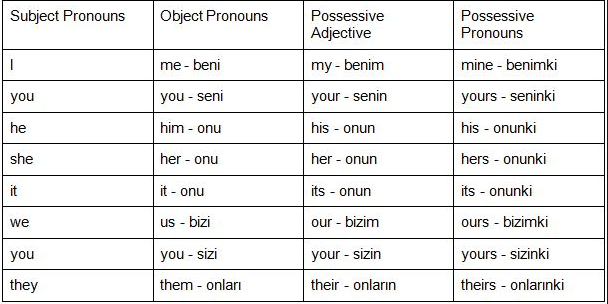
Aitlik zamirleridir ancak aitlik sıfatları gibi isimlerle birlikte kullanılmazlar.
ÖRNEK 😳
  • The car in the front is mine. (Öndeki araba benim-benimki.)
  • There are many keys here. Which of these are yours? (Burada bir çok anahtar var. Seninki bunlardan hangisi?)
Sahiplik yapılarıyla birlikte a/an veya this/that kullanmak istediğimizde “determiner+noun+of mine/yours/his/hers etc.” yapısı kullanılır.
ÖRNEK 😳
  • a former colleague of mine (benim eski bir meslektaşım)
  • an old friend of hers (onun eski bir arkadaşı)

        ➡ I met another colleague of … yesterday. (Ben dün onun başka bir meslektaşı ile karşılaştım.)

a) hers (doğru)       b) her (yanlış)

Türkçe çevirilerde tam anlamı verebilmek için bazen “benimki, seninki vb.” demek yerine “benim, senin vb.” gibi kullanımları kullanırız.
“Whose” ifadesi kendinden sonra bir isimle veya isimsiz kullanılabilir.
ÖRNEK 😳
  • Whose book is this? (Bu kimin kitabı?)
  • Whose is this book? (Bu kitap kimin?)
“One’s” ifadesi kendisinden sonra isim olmadan kullanılmaz. Onun yerine, “one’s own” yapısı kullanılır.
ÖRNEK 😳
  • It’s important to have a belief of one’s own. (NOT ……of one’s) (Birisinin bir inanca sahip olması önemli.)
“Its” zamiri kendinden sonra bir isim olmadan kullanılmaz.
ÖRNEK 😳
  • I’ve eaten my fish and the cat has eaten its fish too. (NOT ……and the cat has eaten its.) (Ben balığımı yedim ve kedi de kendi balığını yedi.)
‘Possessive pronouns’ da ‘possessive adjectives’ gibi sözü geçen nesnenin kime ait olduğunu gösterir. Ancak arkalarından isim gelmez.
ÖRNEK 😳
  • A: My bike is broken. Can I borrow yours? (Benim bisikletim kırık. Seninkini ödünç alabilir miyim?)

          B: Why don’t you ask Dan? (Neden Dan’a sormuyorsun?)

          A: I can’t use his as it is too big. (O çok büyük olduğu için ben onunkini kullanamıyorum.)

          B: Ok. I can give you mine as long as you bring it back before dinner. (Tamam. Onu akşam yemeğinden önce geri getirdiğin müddetçe benimkini sana verebilirim.)

“A, some, many” gibi belirleyicilerden sonra gelen “of” edatından sonra possessive pronoun kullanılır.
ÖRNEK 😳
  • Casie is a neighbour  of James’./She is a neighbour of his. (Casie, onun bir komşusu.)
  • Bob and Patrick called a friend of theirs to ask for money. (Bob ve Patrick para istemek için onların bir arkadaşını çağırdı.)
  • At the end of the term we went on a picnic with a teacher of ours and had quite a nice time together. (Dönemin sonunda bizim bir öğretmenimizle pikniğe gittik ve birlikte oldukça güzel zaman geçirdik.)
  • What do you think of this new haircut of mine? (Benim bu yeni saç kesimim hakkında ne düşünüyorsun?)
Bazı durumlarda ‘possessive pronoun’ yerine ‘object pronoun’ kullanılabilir. Ancak bu durumda anlam değişir.
ÖRNEK 😳
  • My aunt showed me a few photographs of me, which she took in her own house. (Halam bana kendi evinde çektiği benim birkaç fotoğrafımı gösterdi.)
  • I showed my aunt some of the photographs of mine when I went to Long Lead. (Halama Long Lead’e gittiğim zaman çektiğim bazı fotoğraflar gösterdim.)
Vücut organları aşağıda verilen örneklerdeki gibi durumlarda ‘possessive adjectives’ ile kullanılmazlar; ‘the’ belirteciyle ifade edilirler.
ÖRNEK 😳
  • The soldier was wounded on the head.
  • I suddenly turned back when someone tapped me on the shoulder.

The post Possessive Pronouns appeared first on İngilizceyi Severek Öğren.

]]>
https://learnenglishfondly.com/possessive-pronouns/feed/ 0