Deprecated: Return type of Ai1wm_Recursive_Directory_Iterator::hasChildren($allow_links = true) should either be compatible with RecursiveDirectoryIterator::hasChildren(bool $allowLinks = false): bool, or the #[\ReturnTypeWillChange] attribute should be used to temporarily suppress the notice in /home/ceerenco/learnenglishfondly.com/wp-content/plugins/All-In-One-WP-Migration-With-Import-master/lib/vendor/servmask/iterator/class-ai1wm-recursive-directory-iterator.php on line 57

Deprecated: Return type of Ai1wm_Recursive_Directory_Iterator::rewind() should either be compatible with FilesystemIterator::rewind(): void, or the #[\ReturnTypeWillChange] attribute should be used to temporarily suppress the notice in /home/ceerenco/learnenglishfondly.com/wp-content/plugins/All-In-One-WP-Migration-With-Import-master/lib/vendor/servmask/iterator/class-ai1wm-recursive-directory-iterator.php on line 35

Deprecated: Return type of Ai1wm_Recursive_Directory_Iterator::next() should either be compatible with DirectoryIterator::next(): void, or the #[\ReturnTypeWillChange] attribute should be used to temporarily suppress the notice in /home/ceerenco/learnenglishfondly.com/wp-content/plugins/All-In-One-WP-Migration-With-Import-master/lib/vendor/servmask/iterator/class-ai1wm-recursive-directory-iterator.php on line 42

Deprecated: Return type of Ai1wm_Recursive_Extension_Filter::getChildren() should either be compatible with RecursiveFilterIterator::getChildren(): ?RecursiveFilterIterator, or the #[\ReturnTypeWillChange] attribute should be used to temporarily suppress the notice in /home/ceerenco/learnenglishfondly.com/wp-content/plugins/All-In-One-WP-Migration-With-Import-master/lib/vendor/servmask/filter/class-ai1wm-recursive-extension-filter.php on line 47

Deprecated: Return type of Ai1wm_Recursive_Extension_Filter::accept() should either be compatible with FilterIterator::accept(): bool, or the #[\ReturnTypeWillChange] attribute should be used to temporarily suppress the notice in /home/ceerenco/learnenglishfondly.com/wp-content/plugins/All-In-One-WP-Migration-With-Import-master/lib/vendor/servmask/filter/class-ai1wm-recursive-extension-filter.php on line 37

Deprecated: Return type of Ai1wm_Recursive_Exclude_Filter::getChildren() should either be compatible with RecursiveFilterIterator::getChildren(): ?RecursiveFilterIterator, or the #[\ReturnTypeWillChange] attribute should be used to temporarily suppress the notice in /home/ceerenco/learnenglishfondly.com/wp-content/plugins/All-In-One-WP-Migration-With-Import-master/lib/vendor/servmask/filter/class-ai1wm-recursive-exclude-filter.php on line 41

Deprecated: Return type of Ai1wm_Recursive_Exclude_Filter::accept() should either be compatible with FilterIterator::accept(): bool, or the #[\ReturnTypeWillChange] attribute should be used to temporarily suppress the notice in /home/ceerenco/learnenglishfondly.com/wp-content/plugins/All-In-One-WP-Migration-With-Import-master/lib/vendor/servmask/filter/class-ai1wm-recursive-exclude-filter.php on line 37

Deprecated: Return type of Ai1wm_Recursive_Newline_Filter::accept() should either be compatible with FilterIterator::accept(): bool, or the #[\ReturnTypeWillChange] attribute should be used to temporarily suppress the notice in /home/ceerenco/learnenglishfondly.com/wp-content/plugins/All-In-One-WP-Migration-With-Import-master/lib/vendor/servmask/filter/class-ai1wm-recursive-newline-filter.php on line 28

Deprecated: Return type of WPCF7_FormTag::offsetExists($offset) should either be compatible with ArrayAccess::offsetExists(mixed $offset): bool, or the #[\ReturnTypeWillChange] attribute should be used to temporarily suppress the notice in /home/ceerenco/learnenglishfondly.com/wp-content/plugins/contact-form-7/includes/form-tag.php on line 542

Deprecated: Return type of WPCF7_FormTag::offsetGet($offset) should either be compatible with ArrayAccess::offsetGet(mixed $offset): mixed, or the #[\ReturnTypeWillChange] attribute should be used to temporarily suppress the notice in /home/ceerenco/learnenglishfondly.com/wp-content/plugins/contact-form-7/includes/form-tag.php on line 528

Deprecated: Return type of WPCF7_FormTag::offsetSet($offset, $value) should either be compatible with ArrayAccess::offsetSet(mixed $offset, mixed $value): void, or the #[\ReturnTypeWillChange] attribute should be used to temporarily suppress the notice in /home/ceerenco/learnenglishfondly.com/wp-content/plugins/contact-form-7/includes/form-tag.php on line 516

Deprecated: Return type of WPCF7_FormTag::offsetUnset($offset) should either be compatible with ArrayAccess::offsetUnset(mixed $offset): void, or the #[\ReturnTypeWillChange] attribute should be used to temporarily suppress the notice in /home/ceerenco/learnenglishfondly.com/wp-content/plugins/contact-form-7/includes/form-tag.php on line 552

Deprecated: Return type of WPCF7_Validation::offsetExists($offset) should either be compatible with ArrayAccess::offsetExists(mixed $offset): bool, or the #[\ReturnTypeWillChange] attribute should be used to temporarily suppress the notice in /home/ceerenco/learnenglishfondly.com/wp-content/plugins/contact-form-7/includes/validation.php on line 129

Deprecated: Return type of WPCF7_Validation::offsetGet($offset) should either be compatible with ArrayAccess::offsetGet(mixed $offset): mixed, or the #[\ReturnTypeWillChange] attribute should be used to temporarily suppress the notice in /home/ceerenco/learnenglishfondly.com/wp-content/plugins/contact-form-7/includes/validation.php on line 117

Deprecated: Return type of WPCF7_Validation::offsetSet($offset, $value) should either be compatible with ArrayAccess::offsetSet(mixed $offset, mixed $value): void, or the #[\ReturnTypeWillChange] attribute should be used to temporarily suppress the notice in /home/ceerenco/learnenglishfondly.com/wp-content/plugins/contact-form-7/includes/validation.php on line 98

Deprecated: Return type of WPCF7_Validation::offsetUnset($offset) should either be compatible with ArrayAccess::offsetUnset(mixed $offset): void, or the #[\ReturnTypeWillChange] attribute should be used to temporarily suppress the notice in /home/ceerenco/learnenglishfondly.com/wp-content/plugins/contact-form-7/includes/validation.php on line 139

Deprecated: Constant FILTER_SANITIZE_STRING is deprecated in /home/ceerenco/learnenglishfondly.com/wp-content/plugins/wordpress-seo/src/conditionals/third-party/elementor-edit-conditional.php on line 22

Deprecated: Constant FILTER_SANITIZE_STRING is deprecated in /home/ceerenco/learnenglishfondly.com/wp-content/plugins/wordpress-seo/src/conditionals/third-party/elementor-edit-conditional.php on line 28

Warning: Cannot modify header information - headers already sent by (output started at /home/ceerenco/learnenglishfondly.com/wp-content/plugins/contact-form-7/includes/form-tag.php:8) in /home/ceerenco/learnenglishfondly.com/wp-includes/feed-rss2.php on line 8
pronoun arşivleri | İngilizceyi Severek Öğren https://learnenglishfondly.com İngilizceyi Severek,Kolayca,Hızlı Öğren Sat, 17 Aug 2019 13:06:34 +0000 tr hourly 1 https://wordpress.org/?v=6.0.11 Reflexive Pronouns Alıştırma https://learnenglishfondly.com/reflexive-pronouns-alistirma/ https://learnenglishfondly.com/reflexive-pronouns-alistirma/#respond Sat, 17 Aug 2019 12:54:22 +0000 https://learnenglishfondly.com/?p=2226 İngilizceyi Severek Öğren İngilizceyi Severek Öğren - İngilizceyi Severek,Kolayca,Hızlı Öğren

The post Reflexive Pronouns Alıştırma appeared first on İngilizceyi Severek Öğren.

]]>
İngilizceyi Severek Öğren İngilizceyi Severek Öğren - İngilizceyi Severek,Kolayca,Hızlı Öğren

The post Reflexive Pronouns Alıştırma appeared first on İngilizceyi Severek Öğren.

]]>
https://learnenglishfondly.com/reflexive-pronouns-alistirma/feed/ 0
Possessive Pronouns https://learnenglishfondly.com/possessive-pronouns/ https://learnenglishfondly.com/possessive-pronouns/#respond Mon, 05 Aug 2019 10:00:07 +0000 https://learnenglishfondly.com/?p=2125 İngilizceyi Severek Öğren İngilizceyi Severek Öğren - İngilizceyi Severek,Kolayca,Hızlı Öğren

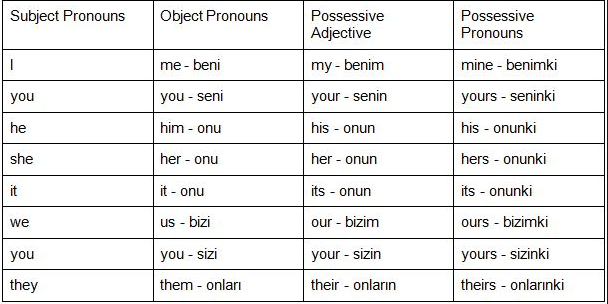
The car in the front is mine. (Öndeki araba benim-benimki.) There are many keys here. Which of these are yours? (Burada bir çok anahtar var. Seninki bunlardan hangisi?) a former colleague of mine (benim eski bir meslektaşım) an old friend of hers (onun eski bir arkadaşı)         ➡ I met another colleague …

The post Possessive Pronouns appeared first on İngilizceyi Severek Öğren.

]]>
İngilizceyi Severek Öğren İngilizceyi Severek Öğren - İngilizceyi Severek,Kolayca,Hızlı Öğren

Aitlik zamirleridir ancak aitlik sıfatları gibi isimlerle birlikte kullanılmazlar.
ÖRNEK 😳
  • The car in the front is mine. (Öndeki araba benim-benimki.)
  • There are many keys here. Which of these are yours? (Burada bir çok anahtar var. Seninki bunlardan hangisi?)
Sahiplik yapılarıyla birlikte a/an veya this/that kullanmak istediğimizde “determiner+noun+of mine/yours/his/hers etc.” yapısı kullanılır.
ÖRNEK 😳
  • a former colleague of mine (benim eski bir meslektaşım)
  • an old friend of hers (onun eski bir arkadaşı)

        ➡ I met another colleague of … yesterday. (Ben dün onun başka bir meslektaşı ile karşılaştım.)

a) hers (doğru)       b) her (yanlış)

Türkçe çevirilerde tam anlamı verebilmek için bazen “benimki, seninki vb.” demek yerine “benim, senin vb.” gibi kullanımları kullanırız.
“Whose” ifadesi kendinden sonra bir isimle veya isimsiz kullanılabilir.
ÖRNEK 😳
  • Whose book is this? (Bu kimin kitabı?)
  • Whose is this book? (Bu kitap kimin?)
“One’s” ifadesi kendisinden sonra isim olmadan kullanılmaz. Onun yerine, “one’s own” yapısı kullanılır.
ÖRNEK 😳
  • It’s important to have a belief of one’s own. (NOT ……of one’s) (Birisinin bir inanca sahip olması önemli.)
“Its” zamiri kendinden sonra bir isim olmadan kullanılmaz.
ÖRNEK 😳
  • I’ve eaten my fish and the cat has eaten its fish too. (NOT ……and the cat has eaten its.) (Ben balığımı yedim ve kedi de kendi balığını yedi.)
‘Possessive pronouns’ da ‘possessive adjectives’ gibi sözü geçen nesnenin kime ait olduğunu gösterir. Ancak arkalarından isim gelmez.
ÖRNEK 😳
  • A: My bike is broken. Can I borrow yours? (Benim bisikletim kırık. Seninkini ödünç alabilir miyim?)

          B: Why don’t you ask Dan? (Neden Dan’a sormuyorsun?)

          A: I can’t use his as it is too big. (O çok büyük olduğu için ben onunkini kullanamıyorum.)

          B: Ok. I can give you mine as long as you bring it back before dinner. (Tamam. Onu akşam yemeğinden önce geri getirdiğin müddetçe benimkini sana verebilirim.)

“A, some, many” gibi belirleyicilerden sonra gelen “of” edatından sonra possessive pronoun kullanılır.
ÖRNEK 😳
  • Casie is a neighbour  of James’./She is a neighbour of his. (Casie, onun bir komşusu.)
  • Bob and Patrick called a friend of theirs to ask for money. (Bob ve Patrick para istemek için onların bir arkadaşını çağırdı.)
  • At the end of the term we went on a picnic with a teacher of ours and had quite a nice time together. (Dönemin sonunda bizim bir öğretmenimizle pikniğe gittik ve birlikte oldukça güzel zaman geçirdik.)
  • What do you think of this new haircut of mine? (Benim bu yeni saç kesimim hakkında ne düşünüyorsun?)
Bazı durumlarda ‘possessive pronoun’ yerine ‘object pronoun’ kullanılabilir. Ancak bu durumda anlam değişir.
ÖRNEK 😳
  • My aunt showed me a few photographs of me, which she took in her own house. (Halam bana kendi evinde çektiği benim birkaç fotoğrafımı gösterdi.)
  • I showed my aunt some of the photographs of mine when I went to Long Lead. (Halama Long Lead’e gittiğim zaman çektiğim bazı fotoğraflar gösterdim.)
Vücut organları aşağıda verilen örneklerdeki gibi durumlarda ‘possessive adjectives’ ile kullanılmazlar; ‘the’ belirteciyle ifade edilirler.
ÖRNEK 😳
  • The soldier was wounded on the head.
  • I suddenly turned back when someone tapped me on the shoulder.

The post Possessive Pronouns appeared first on İngilizceyi Severek Öğren.

]]>
https://learnenglishfondly.com/possessive-pronouns/feed/ 0
OBJECT PRONOUNS https://learnenglishfondly.com/object-pronouns/ https://learnenglishfondly.com/object-pronouns/#respond Sun, 21 Jul 2019 15:33:24 +0000 https://learnenglishfondly.com/?p=1970 İngilizceyi Severek Öğren İngilizceyi Severek Öğren - İngilizceyi Severek,Kolayca,Hızlı Öğren

                 Object Pronouns, nesne zamirleri anlamına gelir. Nesne zamirleri, cümlede nesne durumundaki ismin yerini alırlar. I bought her a birthday present. (Ben ona bir doğum günü hediyesi aldım.) I bought a birthday present for her. ( Ben onun için bir doğum günü hediyesi aldım.) You can take your …

The post OBJECT PRONOUNS appeared first on İngilizceyi Severek Öğren.

]]>
İngilizceyi Severek Öğren İngilizceyi Severek Öğren - İngilizceyi Severek,Kolayca,Hızlı Öğren

                 Object Pronouns, nesne zamirleri anlamına gelir. Nesne zamirleri, cümlede nesne durumundaki ismin yerini alırlar.
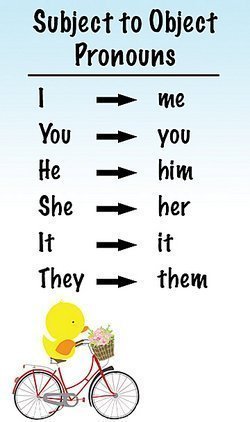
Subject Pronouns                                    Object Pronouns

 Özne Zamirleri                                          Nesne Zamirleri

I Ben Me Beni/Bana
You Sen You Seni/Sana
He O (erkek) Him Onu/Ona
She O (kadın) Her Onu/Ona
It O (cansız/hayvan) It Onu/Ona
We Biz Us Bizi/Bize
You Siz You Sizi/Size
They Onlar Them Onları/Onlara
Cümlede fiilin nesnesi olarak kullanılırlar. Cümlede iki nesne birden varsa, ‘object pronoun’ aşağıdaki örnek cümlelerdeki gibi kullanılır.
ÖRNEK 😀
  • I bought her a birthday present. (Ben ona bir doğum günü hediyesi aldım.)
  • I bought a birthday present for her. ( Ben onun için bir doğum günü hediyesi aldım.)
Phrasal Verb‘lerin bir çoğu bir nesneyle birlikte kullanıldıklarında nesne, ‘verb+noun+preposition’ şeklinde kullanılabileceği gibi ‘verb+preposition+noun’ şeklinde de kullanılabilir.
ÖRNEK 😀
  • You can take your jacket off if you like. (Eğer isterseniz ceketinizi çıkarabilirsiniz.)
  • You can take off your jacket if you like. (Eğer isterseniz ceketinizi çıkarabilirsiniz.)
“As” ve “than” yapılarından sonra kısa cevap verirken “informal” dilde nesne zamirleri kullanılır.
ÖRNEK 😀
  • My sister is nearly as tall as me. (Kız kardeşim neredeyse benim kadar uzundur.)
  • I can run faster than him. (Ben ondan daha hızlı koşabilirim.)
Daha “formal” bir dilde özne zamirleri kullanılır ve bunlardan sonra yardımcı fiil getirilir.
ÖRNEK 😀
  • My brother is as handsome as I am. ( Erkek kardeşim benim kadar yakışıklıdır.)
“But” (except anlamında) yapısından sonra çoğunlukla nesne zamirleri gelir. Özne zamirleri ise bir fiilden önce daha resmi dilde mümkündür.
ÖRNEK 😀
  • Nobody but her would do such a crazy thing. (More formal: Nobody but she …)

(Onun dışında hiç kimse böyle çılgın bir şey yapmazdı.)

Except (for) yapısından sonra nesne zamirleri kullanırız.
ÖRNEK 😀
  • Everybody agreed except (for) me. (NOT … except I)

(Benim dışımda herkes katıldı.)

“It is …” veya “it was …” gibi bir ifadeden sonra bir relative clause geldiğinde iki ihtimal vardır:

a) nesne zamiri + that (informal)

ÖRNEK 😀
  • It was him that rescued the kids. (Çocukları kurtaran oydu.)

b) özne zamiri + who (formal)

ÖRNEK 😀
  • It is I who need your advice. (Tavsiyenize ihtiyaç duyan benim.)
  • It was he who rescued the kids. (Çocukları kurtaran oydu.)
Fazla resmi veya fazla gayriresmi olmaktan kaçınmak için farklı bir yapı kullanarak aynı anlamı verebiliriz.
ÖRNEK 😀
  • He was the person/ the one who rescued the kids. (O, çocukları kurtaran kişiydi.)
Bazen bir zamir, bir fiilin veya “preposition” ın nesnesi olup, aynı zamanda, ardından gelen bir “infinitive-to” yapısının ve clause’un öznesi olabilir. Böyle durumlarda normalde nesne zamiri kullanılır.
ÖRNEK 😀
  • It is for her to decide (NOT It is for she to decide). (Karar vermek onun için.)
“Have” ve “with” kelimeleriyle yapılan betimleyici yapılardaki “preposition” lardan sonraki şahıs zamirleri atılabilir.
ÖRNEK 😀
  • She was carrying a bag with thousands of dollars in (it). ( O, onun içinde veya binlerce dolar olan bir çanta taşıyordu.)
Infinitive-to yapısının nesnesinden zaten yeni bahsedilmişse, nesne zamirleri infinitive clause’larda kullanılmaz.
ÖRNEK 😀
  • The cake was too beautiful to eat. (NOT …too beautiful to eat it)

(Kek yemek için çok güzeldi.) NOT …Kek onu yemek için çok güzeldi.

Object Pronouns hakkında önemli noktalar ve ipuçları…
Cümlede nesne durumunda olan isim veya isim gruplarının yerine:
ÖRNEK 😀
  • I saw Felicia crying yesterday but I didn’t ask her the reason.

(Dün Felicia’yı ağlarken gördüm, ama ona sebebini sormadım.)

  • The girls in the school basketball team played very well and the coach thanked them for their great effort.

(Okuldaki basketbol takımındaki kızlar çok iyi oynadılar ve koç onlara büyük çabaları için teşekkür etti.)

  • Everything was arranged for the summit but the chairman postponed it to the following week.

(Her şey zirveye ayarlandı, ama başkan onu gelecek haftaya erteledi.)

Edatların ardından zamir kullanılmak istendiğinde:
ÖRNEK 😀
  • Caroline is my best friend so please don’t talk behind her, at least when you are with me.

(Caroline benim en iyi arkadaşım, bu yüzden lütfen onun arkasından konuşma, en azından benim yanımdayken.)

Sıfat ve zarfların kullanıldığı karşılaştırma yapılarında:
ÖRNEK 😀
  • I don’t speak English as fluently as him because he has been to Britain several times.

(Ben İngilizceyi onun kadar akıcı bir şekilde konuşmuyorum çünkü o birkaç kez Britanya’ya gitti.)

  • The neighbours next door are a lot noisier than us as they have got three little children.

( Yan evdeki komşuların üç çocuğu olduğu için bizden daha fazla gürültülüler.)

Karşılaştırma yapılan taraf için ‘subject pronoun’ kullanıldığında ardından yardımcı fiil gelmelidir.
ÖRNEK 😀
  • My brother is more stubborn than I am. ( Abim benden daha inatçı.)
  • The Jenkins bought a bigger house than we did. (Jenkins, bizim aldığımız evden daha büyük ev aldılar.)
Bir cümle içerisinde değil de bağımsız olarak kullanıldığında:
ÖRNEK 😀
  • Alp: I didn’t like the film much. (Ben filmi çok fazla sevmedim.)

Beril: Me, neither. (Ben de, değil.)

  • Nilly: Who was shouting in the room yesterday? (Dün odada kim bağırıyordu?)

Bruce: Him, not us. (O, biz değil.)

Bu yapılarda ‘subject pronoun’ kullanıldığında ardından yardımcı fiil gelmelidir.
ÖRNEK 😀
  • Who has left the room in such a mess? ( Odayı, böyle dağınıklık içerisinde kim bıraktı?)

I haven’t. She has. (Ben yapmadım. O yaptı.)

‘It’ zamiri ‘object pronoun’ olarak kullanıldığında ‘love’, ‘hate’ gibi duygu ifade eden fiillerin ardından kullanılabilir.
ÖRNEK 😀
  • My father likes it that our family comes together on special occasions.
  • Ahmet hates it when somebody criticizes his ambition in business.
“find / make / think… + it + adjective” kullanımında:
ÖRNEK 😀
  • When Evelyn went to Toronto for the first time, she found it hard to adapt to the city life.

(Evelyn Toronto’ya ilk kez gittiğinde şehir hayatına alışmayı zor buldu.)

“of” kullanılarak ifade edilen durumlarda zamir özne konumunda olsa bile ‘object pronoun’ kullanılmalıdır.
ÖRNEK 😀
  • Only two of us left the hall earlier because the concert was quite boring.

(Konser çok sıkıcı olduğu için bizden sadece iki kişi salondan erken ayrıldı.)

  • Sam sent her CV to several companies but only one of them called her for an interview.

(Sam CVsi’ni birkaç şirkete gönderdi, ama onlardan sadece bir tanesi görüşme için onu aradı.)

The post OBJECT PRONOUNS appeared first on İngilizceyi Severek Öğren.

]]>
https://learnenglishfondly.com/object-pronouns/feed/ 0
Subject Pronouns Alıştırma https://learnenglishfondly.com/subject-pronouns-alistirma/ https://learnenglishfondly.com/subject-pronouns-alistirma/#respond Sun, 27 Jan 2019 15:03:31 +0000 https://learnenglishfondly.com/?p=1675 İngilizceyi Severek Öğren İngilizceyi Severek Öğren - İngilizceyi Severek,Kolayca,Hızlı Öğren

The post Subject Pronouns Alıştırma appeared first on İngilizceyi Severek Öğren.

]]>
İngilizceyi Severek Öğren İngilizceyi Severek Öğren - İngilizceyi Severek,Kolayca,Hızlı Öğren

The post Subject Pronouns Alıştırma appeared first on İngilizceyi Severek Öğren.

]]>
https://learnenglishfondly.com/subject-pronouns-alistirma/feed/ 0