Possessive Case a) ‘Possessive case’ is that possessive situation is used with nouns. In this case, it is added (‘s) suffix to the end of the nouns. The new manager‘s performance is not as satisfactory as we have expected. b) If a noun is plural; that is there is (s) suffix at the end of the …
The post Possessive Adjectives appeared first on Learn English Fondly.
]]>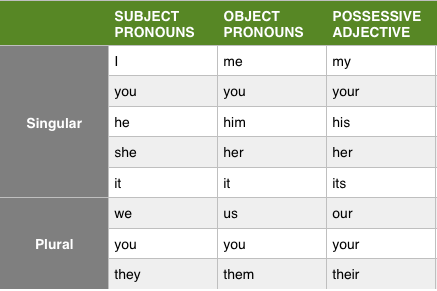
Possessive Case
a) ‘Possessive case’ is that possessive situation is used with nouns. In this case, it is added (‘s) suffix to the end of the nouns.
The new manager‘s performance is not as satisfactory as we have expected.
b) If a noun is plural; that is there is (s) suffix at the end of the noun, it is only put (‘) .
The boy‘s mother is in the living-room talking to her friend over their exam results.
c) If the noun is plural but irregular, it is put (‘s) suffix.
The children‘s parents started to be worried since they hadn’t been in sight for a long time.
d) (s) suffix may be found at the end of some proper nouns. In this case, possessive feature can be expresses both by being put (‘s) suffix to the end of the noun and by only being added (‘) suffix on condition that proper nouns pertain to.
Melis‘s (Melis’) ideas have attracted no attention in the department meeting.
e) Possessive feature always is given with ‘of’ at inanimate entities. However, ‘s is also used with organization names (company,firm …) or words such as Britain, Asia, town, world, city.
The pages of the book have been torn as it has been used for a long time as a reference book.
You need to change the colour of the room and choose a lighter one.
the city’s landscape – the landscape of the city
the firm’s administrative staff – the administrative staff of the firm
f) ‘s is also used with words and patterns besides time words.
I saw the ad in yesterday’s newspaper.
FOR EXAMPLE
Urbanization and globalization will be discussed in tomorrow’s session.
Never expect to be successful after just one hour’s study!
I felt myself completely numb and lazy after twelve hours’ sleep.

- Have you taken your new torch with you?
- It is John‘s book. = It is his book.
- They are my friends’ bikes. = They are their bikes.
- A stone hit me on the head while I was passing by children’s playground.
- One of my friends had a terrible pain in the stomach yesterday.
- One has an obligation to one’s friends.
- Whose book is this?
- I have lost my pen. (NOT …the my pen)
- James has decorated his new house in such a way that its style charms everyone.
- Peter and Sarah have decided to get married in the summer and they think that their wedding will be an unforgettable one.
- My friends and I are working for a charity and we donate some of our pocket money there.
- I don’t need your trekking equipment; I’ve brought my own rope and helmet.
- You can’t find the chart in this computer as Mike wrote it on his own laptop.
- Dora has always longed for a house of her own/ her own house.
- I can’t understand why she likes having a holiday on her own. (alone – by herself)
- It was a real success for the kids to clean the whole garage on their own. (without help – by themselves)
The post Possessive Adjectives appeared first on Learn English Fondly.
]]>PRONOUNS Words used in place of names are called pronouns. They can replace the subject or the object in the sentence, can give meaning to belonging or can express that the subject was influenced by its own work. Pronouns are divided into five as Subject Pronouns, Object Pronouns, Possessive Pronouns, Possessive Adjectives and Reflexive …
The post SUBJECT PRONOUNS appeared first on Learn English Fondly.
]]>PRONOUNS
Words used in place of names are called pronouns. They can replace the subject or the object in the sentence, can give meaning to belonging or can express that the subject was influenced by its own work. Pronouns are divided into five as Subject Pronouns, Object Pronouns, Possessive Pronouns, Possessive Adjectives and Reflexive Pronouns.
SUBJECT PRONOUNS
I
YOU
HE
SHE
IT
WE
THEY
- They are used in place of the subject in the sentence. In addition, it is used previously mentioned subjects and therefore, when mentioning the known subjects.
- I know him.
- Mike is sick. He will be away fo a few days.
- She lives in İstanbul.
- Subjects are also subject when they combine with the It shouldn’t be forgotten that with “and” , “or” , “but” in the sentence, multiple words can create the subject. Therefore, some of these words will not change anything to be pronoun.
- My friend John and … decided to stay at home instead of going out last night.
- I ( true )
- me ( false )
- “One” , “You” , “They” the subject pronouns can be used when it is asked to mention about people in general.
- One/You cannot learn a foreign language in three months.
- They say one apple a day prevents cancer.
- One shouldn’t believe everything that one watches on TV.
- “One” can be the subject or the object. It can take possessive appendix in the form of “One’s”. The aspect of Reflexive Pronoun is in the form of “oneself”.
- She talks to one like a professor.
- One’s family must always come first.
- One should always give oneself some time to make important decisions.
- Some objects and abstract concepts can be expressed with “she” pronoun. For example, a abstract concept as a country, ship or love word can take “she” pronoun. But “it” is more common in Modern English.
- One of the things that made the Titanic so fascinating was that she represented the best of technology when she set sail on her ill-fated voyage in 1912.
- Especially in sentence completion questions, it is brought “they” pronoun to the given part if the institution,foundation, team or group that is mentioned in the previous sentence is.
- Naturally, the police need to know as much as possible… .
- when they deal with actual or suspected criminal activity ( true )
- once he takes the case ( false )
- “It” statement doesn’t only refer to the names of certain things as subject pronoun, we may also use “it” subject pronoun to refer to statements that we call “indefinite” pronouns like “ nothing, anything, everything” .
- Nothing happened, did it ?
- Everything is OK, isn’t it ?
- “It” subject pronoun may also refer to an entire reality, event or situation.
- Our bags were stolen. It totally ruined our vacation.
- I did my best to rescue the boy, but it wasn’t enough.
- It’s so bad; everybody is ill, and the central heating is out of order.
- We use “it” pronoun that we call “empty subject”; which is only used as structural, doesn’t replace any specific name with statements that refer to time, air, temperature and distances.
- It’s five o’clock.
- It’s been raining all day.
- It’s five kilometers to the nearest police station.
- It’s Saturday again.
- It’s twenty degrees.
- “We” and “You” plural that mean you ( None of the others do ) could be brought directly before nouns.
- We men know things that you women will never understand.
- Traditionally, in English when a person’s gender isn’t known or in the submissions that can be interpreted to men and women he is used.
- If a student wants to apply for the scholarship, he must send his CV first.
The post SUBJECT PRONOUNS appeared first on Learn English Fondly.
]]>