Coronaviruses are a type of virus. There are many different kinds, and some cause disease. A newly identified type has caused a recent outbreak of respiratory illness now called COVID-19. How is COVID-19 spread? COVID-19 can be passed from person to person through droplets from coughs and sneezes. COVID-19 has been detected in people all …
The post English News: Coronavirus captures the world, so what’s Coronavirus? appeared first on Learn English Fondly.
]]>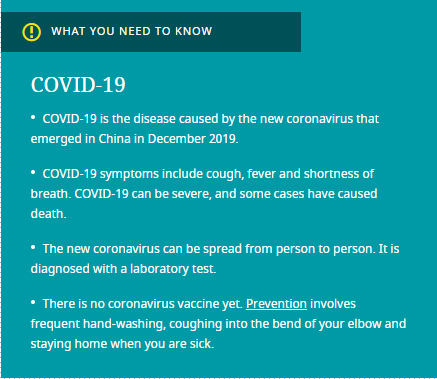
How is COVID-19 spread?
COVID-19 can be passed from person to person through droplets from coughs and sneezes. COVID-19 has been detected in people all over the world, and is considered a pandemic.
The spread of this new coronavirus is being monitored by the Centers for Disease Control (CDC), the World Health Organization and health organizations.
How did this new coronavirus spread to humans?
COVID-19 appeared in Wuhan, a city in China, in December 2019. Although health officials are still tracing the exact source of this new coronavirus, early hypotheses thought it may be linked to a seafood market in Wuhan, China. Some people who visited the market developed viral pneumonia caused by the new coronavirus. A study that came out on Jan. 25, 2020, notes that the individual with the first reported case became ill on Dec. 1, 2019, and had no link to the seafood market. Investigations are ongoing as to how this virus originated and spread.
What is the incubation period for COVID-19?
It appears that symptoms are showing up in people within 14 days of exposure to the virus.
What are symptoms of COVID-19?
COVID-19 symptoms include:
- Cough
- Fever
- Shortness of breath
In rare cases, COVID-19 can lead to severe respiratory problems, kidney failure or death.
If you have a fever or any kind of respiratory difficulty such as coughing or shortness of breath, call your doctor or a health care provider and explain your symptoms over the phone before going to the doctor’s office, urgent care facility or emergency room. Here are suggestions if you feel sick and are concerned you might have COVID-19.
If you have a medical emergency such as severe shortness of breath, call 911 and let them know about your symptoms.
How is COVID-19 diagnosed?
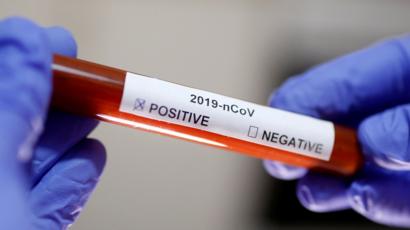
Diagnosis may be difficult with only a physical exam because mild cases of COVID-19 may appear similar to the flu or a bad cold. A laboratory test can confirm the diagnosis.
How is COVID-19 treated?
As of now, there is not a specific treatment for the virus. People who become sick from COVID-19 should be treated with supportive measures: those that relieve symptoms. For severe cases, there may be additional options for treatment, including research drugs and therapeutics.
Does COVID-19 cause death?
As of Mar. 21, 2020, 11,906 deaths have been attributed to COVID-19. However, 89,899 people have recovered from the illness.
Is this coronavirus different from SARS?
SARS stands for severe acute respiratory syndrome. In 2003, an outbreak of SARS started in China and spread to other countries before ending in 2004. The virus that causes COVID-19 is similar to the one that caused the 2003 SARS outbreak: both are types of coronaviruses. Much is still unknown, but COVID-19 seems to spread faster than the 2003 SARS and also may cause less severe illness.
How do you protect yourself from this coronavirus?
It’s crucial to practice good hygiene, respiratory etiquette and social distancing. Read more about ways to protect yourself.
About Coronaviruses
- Coronaviruses are common in different animals. Rarely, an animal coronavirus can infect humans.
- There are many different kinds of coronaviruses. Some of them can cause colds or other mild respiratory (nose, throat, lung) illnesses.
- Other coronaviruses can cause more serious diseases, including severe acute respiratory syndrome (SARS) and Middle East respiratory syndrome (MERS).
- Coronaviruses are named for their appearance: Under the microscope, the viruses look like they are covered with pointed structures that surround them like a corona, or crown.

Outbreak (epidemic, a sudden increase)
Respiratory (relating to respiration; breathing)
Illness (a bodily disorder, disease or physical sickness)
Cough (a sudden, usually noisy expulsion of air from the lungs, often involuntary)
Sneeze (an emission of wind audibly by the nose)
To detect (to discover, find out, lay open, reveal)
Pneumonia (an acute or chronic inflammation of the lungs caused by viruses)
Individual (single, distinct, sole of a particular person, a member of a population)
Investigation (a detailed examination, the process of research)
Incubation (the development of a disease from its causes, period between infection and clinical manifestation of disease)
Exposure (the condition of being exposed, uncovered, or unprotected)
Facility (easiness, services and space and equipment provided for a particular purpose)
Severe (strict, harsh, intense)
Diagnosis (determination of the distinctive nature of a disease)
Therapeutic (relating to the art or act of curing)
Crucial (important)
Rarely (not often, seldom)
To infect (to bring into contact with a substance that can cause illness)
Serious (critical)
Crown (wreath)
The post English News: Coronavirus captures the world, so what’s Coronavirus? appeared first on Learn English Fondly.
]]>The post One / Ones Exercise appeared first on Learn English Fondly.
]]>The post One / Ones Exercise appeared first on Learn English Fondly.
]]>One, ones “Do you need a pen ?” “No, thanks. I already have one.” I prefer light colours to dark ones. The shopkeeper showed me two T-shirts and I bought the one with some flower patterns on. The students in class B have got much better scores than the ones in C. The small buildings …
The post Substitution About Pronouns appeared first on Learn English Fondly.
]]>One, ones

- “Do you need a pen ?” “No, thanks. I already have one.”
- I prefer light colours to dark ones.
- The shopkeeper showed me two T-shirts and I bought the one with some flower patterns on.
- The students in class B have got much better scores than the ones in C.
- The small buildings over there belong to the staff but those large ones are where the administrators stay.
- “I would like to try that shirt on.” “Which one?” “The blue one.”
- “Those students in the back row are from the States, but the ones in the front line are from Canada.”
- Don’t make a sudden decision to work in that company; you deserve a better one with your qualifications.
- The bowl was so small for the salad she made that she had to use two large ones to serve it.
- Don’t insist on answering all the questions in this book; those ones in the worksheet will be enough for revision.
- The band that performed the last in the contest was also the best (one).
- Which (one) would you like to buy out of these two dresses? I will buy the black one if you buy the other (one).
- Please, don’t wear this pink tie; get another (one).
- The one who is standing over there is our landlady.
- Dolores has filed the ones which belong to past year’s clients.
That of / Those of
- I can’t imagine a greater life than that of a teacher. (… than the life of a teacher)
- We should admit that the responsibilities of mothers are far more serious than those of fathers. (the responsibilities of fathers)
One of
- one of his books
- one of the/my/those birds (NOT one of birds)
- One of the cars in the parking lot has been sold.
- One of my classmates was awarded a scholarship in Canada.
- İstanbul is known as one of the most beautiful places not only in Europe but also in the whole world.

- Why don’t you ask one of the crew?
One or it
- I have to get a ticket to travel on public buses but I don’t know where I can get one. .)
- Take this card and don’t lose it; or else, you won’t be allowed to enter there.
- I haven’t got a calculator and I need one for the calculus class.
BUT
- “Have you seen my calculator around here?” “Yes, I’ve just seen it on your desk.”
The post Substitution About Pronouns appeared first on Learn English Fondly.
]]>To clear out ➡ tidy up; move out and don’t leave anything behind; empty completely, clean up To step down ➡ to resign; to descend To break out ➡ to bring out, to escape To fall off ➡ to diminish in size or value To come along ➡ to accompany To turn on ➡ to …
The post Phrasal Verbs – Week 4 appeared first on Learn English Fondly.
]]>To clear out  tidy up; move out and don’t leave anything behind; empty completely, clean up
To step down to resign; to descend
To break out to bring out, to escape
To fall off to diminish in size or value
To come along to accompany
To turn on to switch on
To set off to leave; to begin a journey or trip
To take on to employ
To come across to bump into, to encounter, to run across, to run into
To rule out to exclude
The post Phrasal Verbs – Week 4 appeared first on Learn English Fondly.
]]>Immediately ➡ in an immediate manner; instantly or without delay Increasingly ➡ more and more Incredibly ➡ in an incredible manner; not to be believed Inevitably ➡ in a manner that is impossible to avoid or prevent Largely ➡ in a widespread or large manner Mainly ➡ chiefly, principally, powerfully, primarily Merely ➡ only, just, …
The post Adverbs – Week 4 appeared first on Learn English Fondly.
]]>Immediately in an immediate manner; instantly or without delay
Increasingly more and more
Incredibly in an incredible manner; not to be believed
Inevitably in a manner that is impossible to avoid or prevent
Largely in a widespread or large manner
Mainly chiefly, principally, powerfully, primarily
Merely only, just, and nothing more
Nearly almost, closely, approximately
Necessarily in an essential manner; “such expenses are necessarily incurred”
Notably especially; remarkably; particularly
The post Adverbs – Week 4 appeared first on Learn English Fondly.
]]>Certain ➡ sure, undoubted, fixed, regular, some Cheap ➡ low and or reduced in price Chemical ➡ actinic Clear ➡ bright, not dark or obscured Close ➡ near Cold ➡ feeling the sensation of coldness, especially to the point of discomfort Comfortable ➡ easy; relaxing; bringing comfort; financially well to do Common ➡ simple, ordinary …
The post Adjectives – Week 4 appeared first on Learn English Fondly.
]]>Certain sure, undoubted, fixed, regular, some
Cheap low and or reduced in price
Chemical actinic
Clear bright, not dark or obscured
Close near
Cold feeling the sensation of coldness, especially to the point of discomfort
Comfortable easy; relaxing; bringing comfort; financially well to do
Common simple, ordinary or vulgar
Competitive vying
Complex complicated
The post Adjectives – Week 4 appeared first on Learn English Fondly.
]]>To approach ➡ to approximate, to come on To approve ➡ to sanction officially; to ratify; to confirm To argue ➡ to have an argument, a quarrel To arise ➡ to proceed; to issue; to spring To arrange ➡ to put in order, to organize To arrive ➡ to get to a certain place To …
The post Verbs – Week 4 appeared first on Learn English Fondly.
]]>To approach to approximate, to come on
To approve to sanction officially; to ratify; to confirm
To argue to have an argument, a quarrel
To arise to proceed; to issue; to spring
To arrange to put in order, to organize
To arrive to get to a certain place
To ask to make a request, petition, seek, inquire set a price on
To assess to estimate or judge the value, character, etc., of; evaluate
To associate to connect or join together; combine
To assure to guarantee, promise (to do something)
The post Verbs – Week 4 appeared first on Learn English Fondly.
]]>Art A field or category of art, such as painting, sculpture, music, ballet, or literature Article a term, condition, part of speech, part of a discourse, a clause or item, a distinct but undefined thing Aspect a look, air, appearance, position, view Assessment an appraisal or evaluation Assistance aid; help; the act or result of …
The post Nouns -Week 4 appeared first on Learn English Fondly.
]]>Art  A field or category of art, such as painting, sculpture, music, ballet, or literature
Article a term, condition, part of speech, part of a discourse, a clause or item, a distinct but undefined thing
Aspect a look, air, appearance, position, view
Assessment an appraisal or evaluation
Assistance aid; help; the act or result of assisting
Association a connection to or an affiliation with something
Assumption the thing supposed; a postulate, or proposition assumed; a supposition
Attempt an assault or attack, effort or initiative
Attention the act of attending or minding, caution
Audience hearers, auditory,hearing, interview
The post Nouns -Week 4 appeared first on Learn English Fondly.
]]>The post Pronouns Exercise appeared first on Learn English Fondly.
]]>The post Pronouns Exercise appeared first on Learn English Fondly.
]]>The post Reflexive Pronouns Exercise appeared first on Learn English Fondly.
]]>The post Reflexive Pronouns Exercise appeared first on Learn English Fondly.
]]>